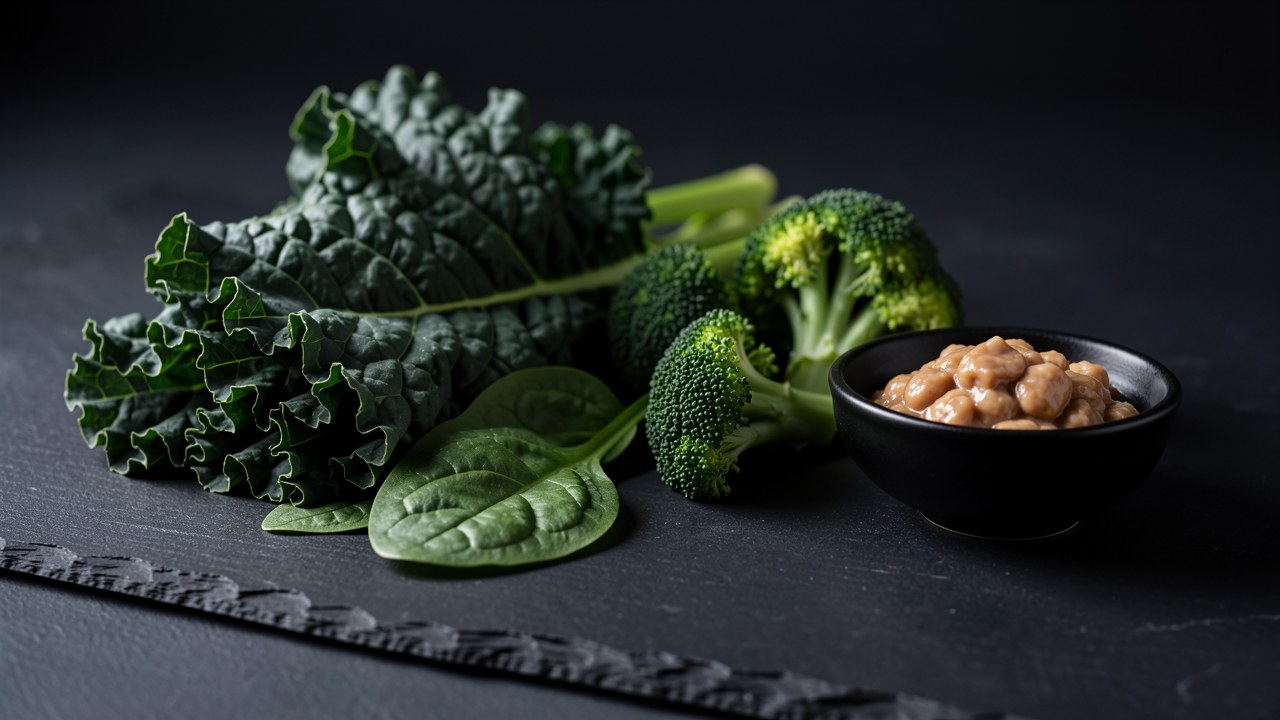
Why Vitamin K Matters for Adults
Vitamin K is essential for your body to produce certain proteins that help blood clot and support bone metabolism. Without enough vitamin K, your blood may not clot normally, and your bones may not stay as strong. For adults, maintaining adequate vitamin K is especially important as you age and your bone health becomes a greater priority.
Because vitamin K is fat-soluble, your body absorbs it better when you eat it with some dietary fat. Unlike some other fat-soluble vitamins, your body stores only small amounts of vitamin K and rapidly metabolizes and excretes it, so you need a regular supply from your diet.
Sources: Office of Dietary Supplements, National Institutes of Health, Harvard T.H. Chan School of Public Health
Vitamin K1 vs. K2: Different Roles
The two naturally occurring forms of vitamin K are vitamin K1 (phylloquinone) and vitamin K2 (menaquinones). They are chemically similar but come from different sources and may have somewhat different functions in your body.
Vitamin K1 is made by plants and is the main dietary form of vitamin K. You find it mostly in green leafy vegetables and some plant oils. K1 is primarily involved in blood clotting.
Vitamin K2 is predominantly of bacterial origin. It appears in modest amounts in some animal-based foods and fermented foods, and your gut bacteria can also produce some K2. Research suggests that K2 may have a greater role in bone health and helping to prevent arterial calcification, though this area is still being studied. Both forms support blood clotting and bone metabolism, but the scientific understanding of their differences is evolving.
- 'type': 'table', 'value': 'caption': 'Key differences between vitamin K1 and K2', 'headers': ['Feature', 'Vitamin K1 (phylloquinone)', 'Vitamin K2 (menaquinones)'], 'rows': [['Primary food sources', 'Green leafy vegetables, some vegetable oils', 'Animal-based and fermented foods, e.g., natto, cheese, egg yolks'], ['Physiological role', 'Blood clotting and bone metabolism', 'Blood clotting and bone metabolism; possible additional role in bone and vascular health'], ['Dietary form', 'Main dietary form', 'Present in modest amounts in the diet']]
Sources: Office of Dietary Supplements, National Institutes of Health, Linus Pauling Institute, Oregon State University
Recommended Intakes for Adults
In the United States, the National Academies have established an Adequate Intake (AI) for vitamin K, which is the amount assumed to ensure nutritional adequacy. For adults aged 19 years and older, the AI is 120 micrograms (mcg) daily for men and 90 mcg daily for women. These amounts also apply during pregnancy and lactation.
Keep in mind that the Daily Value (DV) used on food labels is 120 mcg for adults and children age 4 and older. However, food labels are not required to list vitamin K content unless it has been added to the product.
Sources: Office of Dietary Supplements, National Institutes of Health, Harvard T.H. Chan School of Public Health
Food Sources Rich in Vitamin K
The richest dietary sources of vitamin K1 are dark green leafy vegetables. For example, a half-cup of cooked collard greens provides about 530 mcg, and a similar serving of cooked turnip greens offers about 425 mcg. Spinach, kale, broccoli, and Brussels sprouts are also good sources. Some vegetable oils, such as soybean and canola oil, contribute vitamin K1 as well.
Vitamin K2 is present in smaller amounts in many animal-based foods, such as chicken, egg yolks, ground beef, and liver. Fermented foods, especially natto (a Japanese soybean dish), are notable sources; just 3 ounces of natto can deliver about 850 mcg of vitamin K, mostly as K2.
To meet your daily target, include a variety of these foods in your meals. Since vitamin K is fat-soluble, pairing these foods with a little fat—like a drizzle of olive oil or a serving of avocado—can help your body absorb the vitamin.
- 'type': 'table', 'value': 'caption': 'Selected food sources of vitamin K', 'headers': ['Food', 'Serving', 'Vitamin K (mcg)'], 'rows': [['Natto (fermented soybeans)', '3 ounces', '850'], ['Collard greens, cooked', '1/2 cup', '530'], ['Turnip greens, cooked', '1/2 cup', '425'], ['Spinach, cooked', '1/2 cup', '360'], ['Kale, cooked', '1/2 cup', '330'], ['Broccoli, cooked', '1/2 cup', '110'], ['Brussels sprouts, cooked', '1/2 cup', '80'], ['Soybean oil', '1 tablespoon', '25'], ['Chicken breast, cooked', '3 ounces', '0.1']]
Sources: Office of Dietary Supplements, National Institutes of Health
Signs of Vitamin K Deficiency
Vitamin K deficiency is uncommon in healthy adults, but it can occur, particularly in people with conditions that interfere with fat absorption, such as malabsorption disorders or chronic liver disease, and in those taking vitamin K antagonist anticoagulants like warfarin. Long-term antibiotic use may also increase the risk because it can reduce the bacteria in your gut that produce some vitamin K2.
If you develop a deficiency, you might notice easy bruising, prolonged bleeding from wounds, frequent nosebleeds, bleeding gums, or blood in your urine or stool. Women may experience heavier than normal menstrual bleeding. These signs are related to the reduced ability of your blood to clot. It is important to see a healthcare provider if you experience any of these symptoms, especially if you are taking blood-thinning medication.
Sources: Harvard T.H. Chan School of Public Health, Linus Pauling Institute, Oregon State University
Vitamin K and Anticoagulant Medications
Some anticoagulant medications, particularly warfarin (Coumadin), work by inhibiting the enzyme vitamin K epoxide reductase. This action blocks the recycling of vitamin K in your body, which in turn reduces the production of several blood-clotting factors. Because of this, the amount of vitamin K you consume can affect how well warfarin works.
If you take warfarin, it is crucial to keep your vitamin K intake consistent from day to day. A common recommendation is to aim for about 90–120 mcg per day, which matches the AI for adults. Sudden increases or decreases in vitamin K intake can cause your International Normalized Ratio (INR) to fluctuate, which may increase the risk of bleeding or clotting. Always discuss any planned changes in your diet or supplement routine with your healthcare provider.
This page does not provide personalized medical advice—be sure to follow the guidance of your healthcare team.
Sources: Office of Dietary Supplements, National Institutes of Health, Linus Pauling Institute, Oregon State University
Supplementation: When
For most healthy adults who eat a varied diet, vitamin K supplements are not necessary. Your body needs only small amounts, and you can easily get enough from food. Supplements may be considered for people with a diagnosed deficiency, certain medical conditions that affect absorption, or those taking long-term antibiotics—but only under the supervision of a healthcare provider.
Vitamin K2 supplements, often in combination with vitamin D and calcium, have been studied for their potential to support bone health and reduce arterial calcification. Some evidence from clinical trials suggests benefit, but the research is not definitive. If you are considering a vitamin K2 supplement, talk with your doctor to determine whether it is appropriate for you.
Taking too much vitamin K from food or supplements is unlikely to cause harm because your body quickly metabolizes and excretes it. No tolerable upper intake level has been established, and no toxicity has been observed. However, this does not mean you should exceed recommended amounts without medical advice, especially if you take blood thinners.
Sources: Linus Pauling Institute, Oregon State University, Harvard T.H. Chan School of Public Health, PubMed Central
Frequently asked questions
What is vitamin K2 used for?
Vitamin K2 supports blood clotting and bone metabolism, similar to vitamin K1. Some research suggests it may have additional benefits for bone health and preventing arterial calcification, but the evidence is not conclusive. Your body can also produce some vitamin K2, and you get it from animal-based and fermented foods like natto, cheese, and egg yolks.
Sources: Office of Dietary Supplements, National Institutes of Health, Linus Pauling Institute, Oregon State UniversityShould I take a vitamin K supplement?
Most healthy adults who eat a balanced diet do not need a vitamin K supplement because they can get enough from foods like leafy greens and other sources. Supplements may be necessary for people with a diagnosed deficiency, certain malabsorption conditions, or those taking long-term antibiotics, but you should only take them under a doctor's guidance. If you take warfarin or another blood thinner, never start a vitamin K supplement without discussing it with your healthcare provider first.
Sources: Linus Pauling Institute, Oregon State University, Harvard T.H. Chan School of Public Health, PubMed CentralHow does vitamin K interact with warfarin?
Warfarin works by blocking the recycling of vitamin K in your body, which reduces the production of clotting factors. If you take warfarin, it is important to keep your vitamin K intake consistent day to day, typically around 90–120 mcg per day, to help keep your INR stable. Changing your vitamin K intake suddenly can affect how warfarin works, so discuss any dietary changes or supplements with your healthcare provider.
Sources: Office of Dietary Supplements, National Institutes of Health, Linus Pauling Institute, Oregon State UniversityCan vitamin K help with bone health?
Yes. Vitamin K is needed for the synthesis of proteins that are involved in bone metabolism. Some studies suggest that vitamin K2, especially when combined with vitamin D and calcium, may be a useful addition to osteoporosis treatment and may help prevent arterial calcification, but the evidence is not yet definitive. Maintaining adequate vitamin K through diet is important for bone health as you age.
Sources: Office of Dietary Supplements, National Institutes of Health, PubMed CentralSources
- Vitamin K - Health Professional Fact Sheet — Office of Dietary Supplements, National Institutes of Health
- Vitamin K — Linus Pauling Institute, Oregon State University
- Vitamin K — Harvard T.H. Chan School of Public Health
- Vitamins K1 and K2: The Emerging Group of Vitamins Required for Human Health — PubMed Central