Before You Take Supplements: Questions to Ask
More than half of U.S. adults take a dietary supplement regularly, yet less than a quarter of those products are used on the advice of a healthcare provider. Before you add any vitamin, mineral, or other supplement to your routine, it’s worth pausing to ask a few basic questions.
Start by considering your actual diet. Do you eat a variety of nutrient-dense foods? Are there gaps that a supplement could reasonably fill? Then ask yourself whether a supplement is truly necessary, whether it could interact with medications you take, and whether you have discussed it with a clinician or pharmacist. Taking a thoughtful approach helps you avoid unnecessary expense and potential harm.
- What specific nutrient am I trying to address?
- Could I get this nutrient from food first?
- Have I talked with my healthcare provider about this supplement?
- Am I taking any medications that could interact with this product?
- What dose is appropriate for me, and am I already getting this nutrient from food or other supplements?
Sources: American Journal of Pharmaceutical Education, JAMA / National Library of Medicine
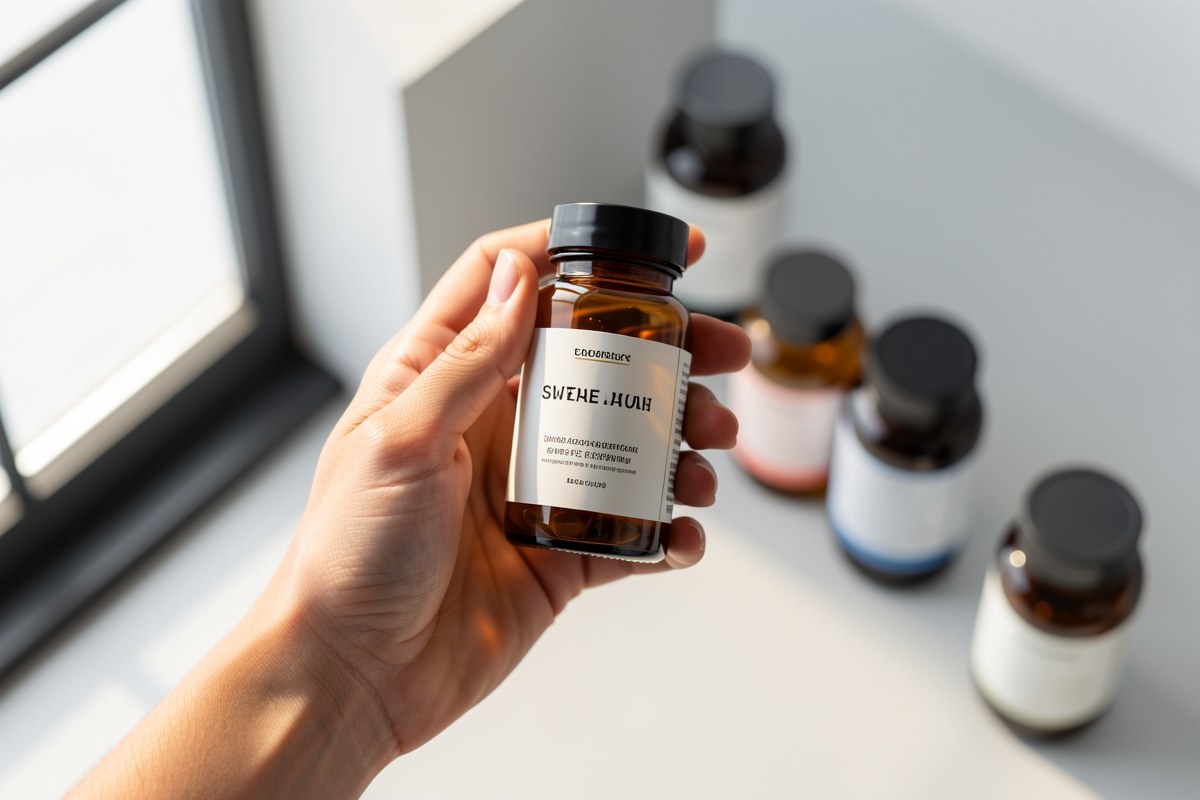
How to Read a Supplement Label
A supplement label is your primary source of information about what’s inside the bottle, but it’s only useful if you know how to interpret it. The most important sections are the Supplement Facts panel, the ingredient list, and any certification seals.
The Supplement Facts panel lists active ingredients, serving size, and the amount per serving. Check whether the amounts align with recommended daily values and whether any nutrient exceeds the Tolerable Upper Intake Level (UL) for that nutrient. Also look for a list of inactive ingredients, such as fillers, binders, or allergens.
Be wary of vague language or proprietary blends that don’t disclose exact amounts of each ingredient. A label that makes bold health claims without specifics may be a red flag. If the product is third-party verified, it will usually display a seal from a program such as USP or NSF, which we’ll discuss in a later section.
- Read the Supplement Facts panel to see the serving size and the amount of each nutrient.
- Check whether doses are within safe upper limits, especially for vitamins A, D, and niacin.
- Scan the ingredient list for allergens and unnecessary additives.
- Look for third-party verification seals such as USP or NSF.
- Be cautious of products that make exaggerated claims without clear labeling.
Understanding the FDA's Role in Supplements
In the United States, the Food and Drug Administration (FDA) regulates dietary supplements differently from prescription or over-the-counter drugs. While drugs must receive premarket approval showing they are safe and effective, most supplements do not need FDA approval before they are sold.
The FDA’s oversight is largely post-market, meaning the agency can take action if a product proves unsafe after it is on store shelves. The Federal government has acknowledged that the FDA has minimal oversight and cannot require companies to provide scientific documentation supporting a claim in many cases. This is why it’s important for you to be an informed consumer.
The FDA does require that supplement labels be truthful and not misleading, and manufacturers are responsible for ensuring their products are safe. But the lack of premarket review means that the burden of evaluating safety and quality often falls on the consumer.
- Most dietary supplements do not require FDA approval before they are marketed.
- FDA oversight is largely post-market, as the agency cannot force companies to document science behind their claims in many cases.
- Manufacturers are responsible for product safety and label accuracy.
- Because of this regulatory framework, consumers should research products before using them.
Sources: American Journal of Pharmaceutical Education, Innovations in Pharmacy / National Library of Medicine
Quality and Purity: Third-Party Testing
Because the FDA doesn’t routinely test supplements for quality or purity, third-party verification programs help fill that gap. Organizations such as the United States Pharmacopeia (USP) and ConsumerLab.com offer voluntary testing and certification. Products that earn their seals have been manufactured under current good manufacturing practice, contain the listed ingredients in the indicated amounts and forms that are bioavailable, and are free from contaminants.
When you see a USP or NSF seal on a product, it indicates that an independent laboratory has reviewed the product’s contents and manufacturing process. This adds confidence that what’s on the label matches what’s in the bottle. However, not all high-quality supplements are third-party tested, and the absence of a seal doesn’t necessarily mean a product is poor quality—it just means you have less outside assurance.
Third-party testing can also help you avoid products that might be contaminated with heavy metals, undeclared ingredients, or other substances. Given the size of the supplement market—more than 85,000 products available in the U.S.—independent verification is a useful tool in your decision-making.
- USP and ConsumerLab.com verify that products meet standards for quality, purity, and accurate labeling.
- Third-party verification helps ensure the product contains what it claims and is free from harmful contaminants.
- Look for seals from recognized programs to add an extra layer of trust.
- Remember that third-party testing is voluntary, so some quality products may not carry a seal.
Sources: American Journal of Pharmaceutical Education, Innovations in Pharmacy / National Library of Medicine
Potential Interactions with Medications
Supplements can interact with prescription and over-the-counter medications, sometimes causing serious health issues. Certain vitamins, minerals, and botanical extracts can alter how your body absorbs or processes drugs. For instance, vitamin K can interfere with blood thinners such as warfarin, and some antioxidants might reduce the effectiveness of certain chemotherapy drugs.
The risk of interactions is especially concerning for older adults who often take multiple medications. If you’re taking any prescription drug, always check with your pharmacist or healthcare provider before adding a supplement. They can review potential interactions and help you decide whether the supplement is safe for your specific situation.
It’s also important to tell your healthcare provider about every supplement you use, even if it seems harmless. Some people assume that natural products are always safe, but that’s not the case. A professional can help you weigh benefits and risks.
- Supplements can interact with medications, sometimes increasing or decreasing their effects.
- Older adults who take multiple medications are at higher risk of interactions.
- Always consult a healthcare provider or pharmacist before starting a new supplement.
- Be transparent about all supplements you take, even vitamins and minerals.
Recognizing Over-Supplementation and Toxicity
Taking more than the recommended amount of any vitamin or mineral can be harmful. While some nutrients are water-soluble and excess amounts are excreted in urine, others, particularly fat-soluble vitamins like A, D, E, and K, can accumulate in the body and reach toxic levels. Over-supplementation can also happen when you unknowingly take multiple products that contain the same ingredient.
Still, this shows it is possible to exceed safe limits, especially if you combine a multivitamin with individual high-dose supplements.
Signs of toxicity vary depending on the nutrient. For example, vitamin A in high doses can cause chronic toxicity, leading to symptoms such as liver damage, vision problems, and severe headache. Niacin in high doses can cause skin flushing and, in extreme cases, liver injury. If you experience unusual symptoms after starting a supplement, stop taking it and seek medical advice.
- Fat-soluble vitamins (A, D, E, K) can accumulate to toxic levels if taken in excess.
- Combining multiple products that contain the same vitamin or mineral increases the risk of exceeding the UL.
- High-dose vitamin A can cause chronic toxicity with symptoms such as skin desquamation, liver impairment, loss of vision, and severe intracranial hypertension.
- Water-soluble vitamins can also cause problems at high doses—vitamin C may lead to diarrhea and gastrointestinal upset, and niacin can cause flushing and liver damage.
- If you experience adverse effects, discontinue the supplement and consult a healthcare provider.
Sources: American Journal of Pharmaceutical Education, Nutrients (MDPI) / National Library of Medicine, Advances in Nutrition / National Library of Medicine
Safe Storage
How you store your supplements can affect their potency and safety. Many vitamins, especially water-soluble ones like vitamin C and the B vitamins, are sensitive to heat, light, and oxygen. Over time, exposure to these elements can degrade the nutrients, reducing their effectiveness.
Fatty supplements, such as fish oil or other omega-3 products, are prone to oxidation, which can make them rancid and potentially harmful. Storing them in a cool, dark place helps slow this process. Always keep supplements in their original containers with lids tightly closed, and avoid humid environments like bathrooms, as moisture can cause clumping and microbial growth.
Check the expiration date before use and follow any specific storage instructions on the label. Some products may require refrigeration. If you notice a change in color, smell, or texture, it’s often a sign that the product has degraded and should be discarded.
- Store supplements in a cool, dry, dark place, away from direct sunlight and heat.
- Keep them in their original containers with lids tightly closed.
- Avoid storing in bathrooms or areas with high humidity.
- Check expiration dates and discard products that have changed in appearance or odor.
- Follow label instructions for specific storage requirements, such as refrigeration.
Sources: iHerb
Supplements vs. Food: Why Food Comes First
Food should always be your first source of vitamins and minerals. Nutrient-dense foods provide a complex mix of vitamins, minerals, fiber, and other beneficial compounds that work together to support health. Whole foods offer more than just isolated nutrients—they provide a synergy that supplements cannot fully replicate.
The Dietary Guidelines for Americans recommend consuming a variety of nutrient-dense foods and, in some cases, fortified foods and dietary supplements to help achieve nutrient adequacy. While supplements can help fill specific gaps, they are not a substitute for a healthy diet. In fact, studies show that supplement use is associated with a reduced risk of deficiency, but it also can contribute to excessive intakes of some nutrients if you’re not careful.
If you are concerned about a deficiency or considering a supplement, it’s wise to talk with a healthcare professional. They can assess your dietary intake and recommend whether a supplement is necessary, and if so, which type and dose might be appropriate.
- Foods contain a complex array of nutrients and non-nutrients that supplements don’t provide.
- Dietary supplements are not a substitute for a balanced diet.
- Some people may benefit from supplements to fill specific nutrient gaps.
- A healthcare provider can help you determine whether you need a supplement based on your diet and health status.
Sources: Nutrients (MDPI) / National Library of Medicine, Current Opinion in Gastroenterology / National Library of Medicine
Frequently asked questions
Can I take multiple supplements at once?
It is generally safe to take multiple supplements simultaneously, but it’s important to check the total amounts of each nutrient you are consuming from all products. Combining a multivitamin with additional high-dose supplements can lead to intakes above the Tolerable Upper Intake Level for certain vitamins and minerals, which may be harmful. Also, some supplements can interact with each other or with medications. To avoid potential risks, review labels to see if the combined doses exceed recommended upper limits, and talk with a healthcare provider to ensure the combination is safe for you.
Sources: American Journal of Pharmaceutical Education, Nutrients (MDPI) / National Library of MedicineAre supplements regulated by the FDA?
The FDA does regulate dietary supplements, but not as strictly as it regulates drugs. Most supplements do not need FDA approval before they are sold. The FDA’s role is primarily post-market, meaning it can take action if a product is found to be unsafe after it is on the market. The agency does require that labels be truthful and not misleading, but it cannot force companies to provide scientific evidence for many claims. Manufacturers are responsible for ensuring their products are safe and accurately labeled.
Sources: American Journal of Pharmaceutical Education, Innovations in Pharmacy / National Library of MedicineWhat does 'USP verified' mean?
USP verified means that a product has voluntarily undergone testing by the United States Pharmacopeia (USP), an independent organization. Products that earn USP verification have been manufactured under current good manufacturing practice, contain the listed ingredients in the indicated amounts that are bioavailable, and are free from contaminants. This third-party certification provides confidence that the product label is accurate and that the product is of good quality.
Sources: American Journal of Pharmaceutical EducationWhat vitamins can become toxic if taken in excess?
Fat-soluble vitamins, including A, D, E, and K, can accumulate in the body and cause toxicity when taken in high doses over time. High-dose vitamin A can lead to chronic toxicity, with symptoms such as skin desquamation (peeling), liver impairment, loss of vision, and severe intracranial hypertension. Water-soluble vitamins are less likely to accumulate, but very high doses can still cause adverse effects; for example, niacin (B3) can cause flushing and liver damage, and vitamin C can cause diarrhea and stomach upset.
Sources: Advances in Nutrition / National Library of MedicineHow do I know if a supplement is safe?
To assess supplement safety, start by checking for third-party verification seals from programs like USP or NSF, which indicate that a product has been tested for quality and purity. Read the label carefully to understand the ingredients and dosages, and ensure you are not exceeding the Tolerable Upper Intake Level for any nutrient. Consider your current medications and any health conditions, and talk with a healthcare provider before starting a new supplement. The FDA does not pre-approve most supplements, so it’s important to be proactive about researching products and staying within safe limits.
Sources: American Journal of Pharmaceutical Education, Innovations in Pharmacy / National Library of MedicineSources
- An Elective Course on the Basic and Clinical Sciences Aspects of Vitamins and Minerals - PMC — American Journal of Pharmaceutical Education
- A Comparison of Current Regulatory Frameworks for Nutraceuticals in Australia, Canada, Japan, and the United States — Innovations in Pharmacy / National Library of Medicine
- Risk of Deficiency in Multiple Concurrent Micronutrients in Children and Adults in the United States - PMC — Nutrients (MDPI) / National Library of Medicine
- Contribution of Dietary Supplements to Nutritional Adequacy by Socioeconomic Subgroups in Adults of the United States — Nutrients (MDPI) / National Library of Medicine
- Perspective: Role of Micronutrients and Omega-3 Long-Chain Polyunsaturated Fatty Acids for Immune Outcomes of Relevance to Infections in Older Adults—A Narrative Review and Call for Action — Advances in Nutrition / National Library of Medicine
- Micronutrient Status and Protein-Energy Malnutrition in Free-Living Older Adults: A Current Perspective — Current Opinion in Gastroenterology / National Library of Medicine
- Trends in Dietary Supplement Use among US Adults From 1999–2012 - PMC — JAMA / National Library of Medicine
- How To Store Supplements And Vitamins Correctly | Wellness Hub — iHerb