What Is Vitamin E and Why It Matters
Vitamin E is a fat-soluble vitamin that acts as an antioxidant, protecting cell membranes from oxidative damage. Your body needs it to help maintain healthy cells and support immune function. It also helps prevent blood clots from forming in heart arteries, although that effect is not a reason to take high-dose supplements.
There are eight naturally occurring forms of vitamin E, but alpha-tocopherol is the only form that meets human requirements. When you see vitamin E on a supplement label, it is usually alpha-tocopherol or a mix of tocopherols.
Because vitamin E is fat-soluble, your body stores it in fat tissue and the liver. This means you do not need to consume it every single day, but you do need regular intake from food or supplements to keep your levels within a healthy range.
Sources: Linus Pauling Institute, Oregon State University, Harvard T.H. Chan School of Public Health
Recommended Dietary Allowances (RDA) for Adults
The Recommended Dietary Allowance (RDA) for vitamin E for adult men and women is 15 mg per day of alpha-tocopherol. This amount is the same for men and women ages 14 and older. Lactating women need slightly more, 19 mg per day.
The RDA is based on the amount that is sufficient to prevent deficiency in most healthy people. For reference, 15 mg is about 22 international units (IU) of natural vitamin E, but food labels often use the Daily Value (DV), which is currently set at 15 mg per day.
Many adults in the United States do not meet the RDA from food alone – the average intake is estimated at about 7.2 mg per day. However, that average does not mean that frank deficiency is common. Your body can store vitamin E, and clinical deficiency is rare in the US.
Sources: Linus Pauling Institute, Oregon State University, Harvard T.H. Chan School of Public Health
Food Sources: Nuts, Seeds, and Greens
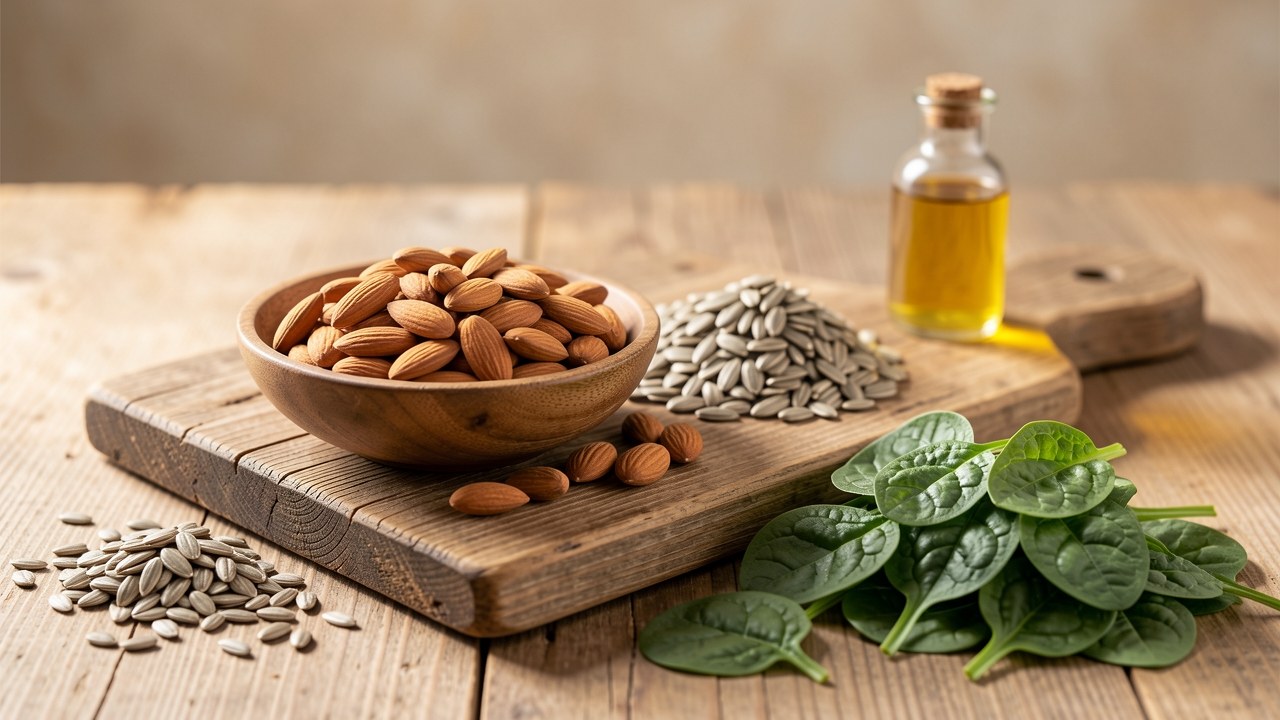
The richest sources of vitamin E are plant oils, nuts, and seeds. Sunflower seeds and almonds are also excellent sources – a one-ounce serving of dry-roasted sunflower seeds provides about 7.4 mg, and the same amount of almonds (about 23 nuts) gives about 7.3 mg.
Other nuts and seeds, such as hazelnuts and peanut butter, contribute smaller but useful amounts. Leafy green vegetables – including spinach, collard greens, and beet greens – add vitamin E to your diet, as do red bell pepper, avocado, and mango.
Because vitamin E is fat-soluble, your body absorbs it better when you eat these foods with some fat. A salad with olive oil dressing, for example, helps your intestines take up the vitamin E from the greens and vegetables.
- Sunflower seeds (dry roasted): 1 ounce ≈ 7.4 mg (~49% DV)
- Almonds: 1 ounce ≈ 7.3 mg (~45–50% DV)
- Leafy greens (spinach, collard greens, beet greens)
- Other sources: red bell pepper, avocado, mango, hazelnuts, peanut butter
Sources: Harvard T.H. Chan School of Public Health, WebMD, Healthline, Healthdirect Australia, GoodRx
Signs of Deficiency: Rare but Possible
Frank vitamin E deficiency is rare in the United States. When it occurs, it is usually linked to conditions that interfere with fat absorption, such as pancreatitis, cystic fibrosis, or celiac disease.
Signs of deficiency include retinopathy (damage to the retina), peripheral neuropathy (nerve damage causing numbness or weakness), ataxia (loss of coordination), and decreased immune function.
If you have a condition that affects fat absorption, your healthcare provider may check your vitamin E levels and recommend a supplement. Otherwise, a varied diet usually provides enough vitamin E to prevent these deficiency signs.
Sources: Linus Pauling Institute, Oregon State University, Harvard T.H. Chan School of Public Health, Healthdirect Australia
Vitamin E Supplementation: Who Might Need It
Most adults do not need a vitamin E supplement. Eating a diet that includes nuts, seeds, and leafy greens typically meets the RDA. If your average intake is below 15 mg per day, you may consider adding more vitamin E-rich foods before turning to a supplement.
Supplements may be appropriate for people who cannot absorb fat properly, such as those with cystic fibrosis or short bowel syndrome, or for people with a diagnosed deficiency. In those situations, a healthcare provider can recommend the right dose and form.
For healthy adults, taking a multivitamin that includes vitamin E is generally safe, but high-dose vitamin E supplements (above the upper limit) carry risks and are not supported by evidence for preventing chronic disease.
Sources: Harvard T.H. Chan School of Public Health, Linus Pauling Institute, Oregon State University
Upper Intake Level and Excess
The Tolerable Upper Intake Level (UL) for vitamin E is 1,000 mg per day for adults. This limit applies only to supplemental tocopherol, not to the vitamin E you get from food.
Taking more than 1,000 mg per day can increase the risk of bleeding. This is of particular concern for people who take blood-thinning medication such as warfarin. Some research has also suggested that very high doses – above 400 IU per day (about 268 mg) – may be associated with increased risk of all-cause mortality, though the findings are not conclusive.
Because vitamin E is fat-soluble, your body does not excrete excess amounts quickly. That means if you take high-dose supplements, levels can build up in your tissues, increasing the risk of adverse effects over time.
Interactions with Medications
High-dose vitamin E supplements can interact with certain medications, especially blood thinners. Vitamin E has antiplatelet effects, meaning it can reduce blood clotting. When combined with a blood thinner like warfarin, high doses of vitamin E may enhance the medication's effect and increase the risk of bleeding.
If you take an anticoagulant or antiplatelet medication, talk to your healthcare provider before taking a vitamin E supplement. They can help you weigh the potential risks and benefits based on your medical history.
Vitamin E can also interact with other drugs that affect blood clotting, such as aspirin or clopidogrel, though the clinical significance is not well established. As with any supplement, it is wise to disclose all supplements you take to your healthcare provider.
Frequently asked questions
What is vitamin E good for in adults?
Vitamin E acts as an antioxidant, protecting cell membranes from oxidative damage. It also supports immune function and helps prevent blood clots from forming in heart arteries. These roles are best supported by getting vitamin E from a balanced diet rather than from high-dose supplements.
Sources: Harvard T.H. Chan School of Public Health, Linus Pauling Institute, Oregon State UniversityCan vitamin E prevent heart disease or cancer?
No. Research has not shown that vitamin E supplementation prevents cardiovascular disease or cancer in healthy people. While vitamin E has antioxidant properties, clinical trials have not found a clear protective effect for these chronic conditions.
Sources: Harvard T.H. Chan School of Public Health, HealthlineAre vitamin E supplements necessary if I eat a balanced diet?
For most adults with a balanced diet that includes nuts, seeds, and leafy greens, vitamin E supplements are not necessary. Your body can meet its needs from food. Supplements are only warranted in cases of fat malabsorption or a diagnosed deficiency.
Sources: Linus Pauling Institute, Oregon State University, Harvard T.H. Chan School of Public HealthWhat are the symptoms of vitamin E deficiency?
Vitamin E deficiency can cause retinopathy, peripheral neuropathy, ataxia, and decreased immune function. It is rare in the United States and usually occurs in people with fat malabsorption disorders.
Sources: Harvard T.H. Chan School of Public Health, Healthdirect AustraliaHow does vitamin E interact with blood thinners?
High-dose vitamin E supplements can enhance the antiplatelet effects of blood thinners such as warfarin, increasing the risk of bleeding. If you take a blood thinner, talk to your healthcare provider before taking vitamin E supplements.
Sources: Harvard T.H. Chan School of Public Health, GoodRxSources
- Vitamin E | Linus Pauling Institute | Oregon State University — Linus Pauling Institute, Oregon State University
- Vitamin E and Your Health • The Nutrition Source — Harvard T.H. Chan School of Public Health
- 8 Foods High in Vitamin E and Why You Need It — WebMD
- Vitamin E: Uses and Benefits — Healthline
- Vitamin E and your health - foods high in vitamin E | healthdirect — Healthdirect Australia
- Best Food Sources of Vitamin E for a Balanced Diet - GoodRx — GoodRx