Role of Folate in the Body
Folate, also known as vitamin B9, is a water-soluble B vitamin that your body needs to function properly. It acts as a coenzyme in DNA synthesis and cell division, meaning it helps your body create new cells, including red blood cells. Because of its role in cell growth, folate is essential for maintaining healthy tissues and supporting normal growth and development.
Your body does not store large amounts of folate, so you need a regular supply from your diet or supplements. Fortunately, many foods naturally contain folate, and in the United States, certain grain products are fortified with the synthetic form, folic acid, to help people meet their needs.
Sources: National Institutes of Health, Office of Dietary Supplements
Recommended Intakes for Adults
The Recommended Dietary Allowance (RDA) for folate is the average daily level that meets the needs of nearly all healthy adults. For adults aged 19 years and older, the RDA is 400 micrograms (mcg) of dietary folate equivalents (DFE) per day for both men and women. This amount is achievable through a balanced diet that includes folate-rich foods and fortified grains.
Special life stages require more. If you are pregnant, the RDA increases to 600 mcg DFE per day, and if you are breastfeeding, it is 500 mcg DFE per day. These higher amounts support the rapid cell division and growth that occur during pregnancy and milk production.
Sources: National Institutes of Health, Office of Dietary Supplements
Folate vs. Folic Acid: Key Differences
It is common to hear 'folate' and 'folic acid' used interchangeably, but they are not exactly the same. Folate is the natural form of vitamin B9 found in foods like leafy greens, legumes, and liver. Folic acid is the synthetic form used in dietary supplements and added to fortified foods such as enriched breads, cereals, and flours.
Your body absorbs folic acid more easily than natural food folate. When you consume folic acid with food, your body uses at least 85% of it, while only about 50% of the folate naturally present in foods is bioavailable. This difference is why dietary recommendations use dietary folate equivalents (DFE) to account for the varying absorption.
Sources: National Institutes of Health, Office of Dietary Supplements
Food Sources of Folate
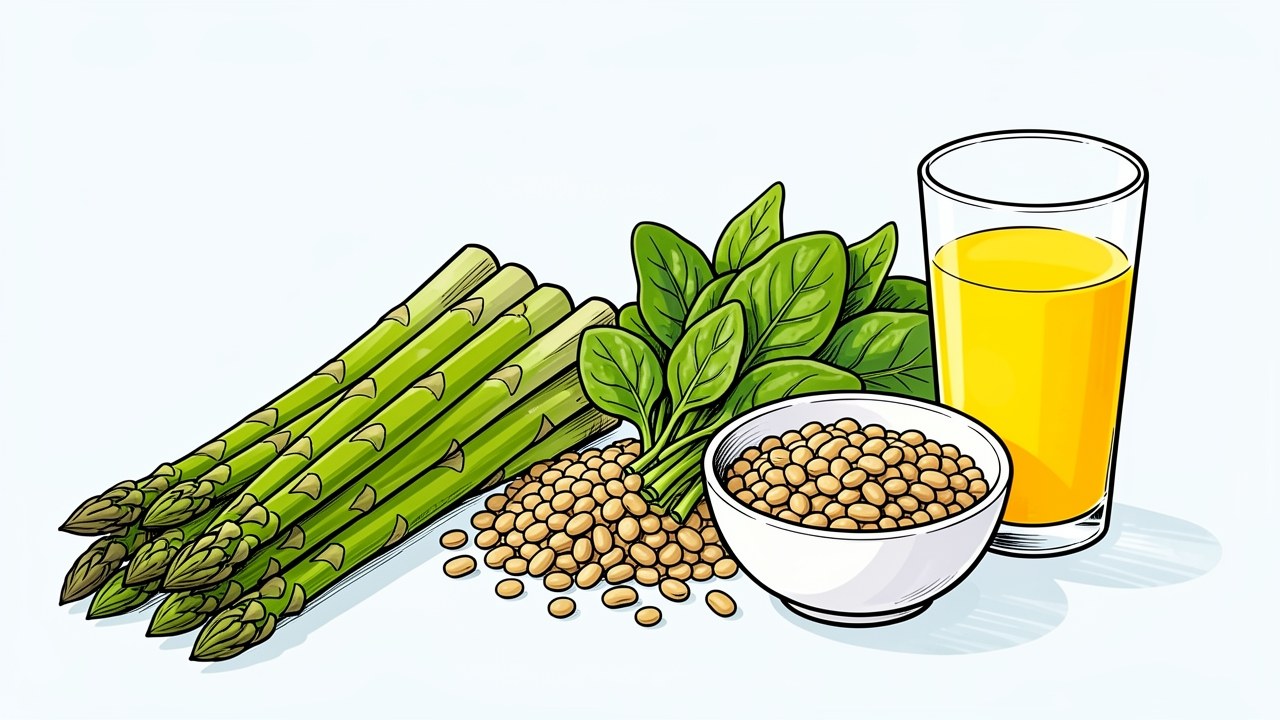
Many foods naturally contain folate. Some of the richest sources include spinach, liver, asparagus, Brussels sprouts, and legumes such as beans and lentils. Including a variety of these foods in your meals can help you reach your daily folate goal.
In addition to natural sources, the United States has fortified enriched cereal grain products with folic acid since 1998. This means foods like enriched breads, pasta, rice, and cornmeal provide extra folic acid. In 2016, the FDA also allowed voluntary folic acid fortification of corn masa flour to help reduce neural tube defects among Hispanic women of reproductive age.
- Spinach and other dark leafy greens
- Liver (beef or chicken)
- Asparagus and Brussels sprouts
- Legumes: beans, lentils, peas
- Enriched grains: bread, pasta, rice, cornmeal
Sources: National Institutes of Health, Office of Dietary Supplements, National Center for Biotechnology Information (NCBI)
Folate Deficiency
Insufficient folate can lead to a condition called megaloblastic anemia. This happens because folate is needed for DNA synthesis, and without enough of it, red blood cells cannot divide normally. They become large and immature, which impairs their ability to carry oxygen. As a result, you might feel fatigued, weak, and have difficulty concentrating. Folate deficiency can also weaken your immune system, making you more prone to infections.
While folate deficiency is uncommon in the United States today, it can still occur in certain situations. If you have a poor diet, an underlying malabsorption condition, or increased needs, you may be at higher risk.
Sources: National Institutes of Health, Office of Dietary Supplements, Mayo Clinic
At-Risk Groups
Some adults are more likely than others to have low folate levels. If you have an alcohol use disorder, heavy alcohol consumption can interfere with folate absorption and increase its excretion. People with malabsorption conditions like celiac disease or inflammatory bowel disease may not absorb folate efficiently. Pregnant women have higher needs, and certain medications, such as anticonvulsants or methotrexate, can reduce folate status.
If you belong to any of these groups, talk with your healthcare provider about whether a folic acid supplement is appropriate for you.
- People with alcohol use disorder
- Individuals with malabsorption conditions (celiac disease, inflammatory bowel disease)
- Pregnant women
- People taking medications that interfere with folate metabolism
Sources: Mayo Clinic, Clemson University Cooperative Extension
Folic Acid Supplementation Recommendations
The Centers for Disease Control and Prevention and other health organizations recommend that all women who could become pregnant take 400 to 800 micrograms of folic acid daily from supplements, fortified foods, or both, in addition to consuming food folate from a varied diet. This helps prevent neural tube defects in early pregnancy, often before a woman knows she is pregnant.
For most adults, however, a daily folic acid supplement is not necessary if you eat a balanced diet. The RDA of 400 mcg DFE per day can be met through food alone in most cases. About 35% of U.S. adults currently take supplements containing folic acid, often as part of a multivitamin. If you are considering a supplement, it is wise to choose a dose that fits your overall intake from fortified foods.
Sources: National Academies of Sciences, Engineering, and Medicine, Mayo Clinic, National Institutes of Health, Office of Dietary Supplements
Safety and Upper Limits
Folate from natural foods has no upper limit and is not associated with adverse effects, even when consumed in large amounts. However, the same is not true for folic acid from supplements and fortified foods. The Tolerable Upper Intake Level (UL) for folic acid is set at 1,000 micrograms (1 milligram) per day for adults. This limit applies only to the synthetic form, not to natural food folate.
One key safety concern is that high folic acid intake can mask the symptoms of vitamin B12 deficiency. If you have low vitamin B12, taking large amounts of folic acid may correct the anemia that would normally alert you to the problem, while the neurological damage from B12 deficiency continues silently. This delay in diagnosis can lead to permanent nerve damage.
In a recent analysis of U.S. Those who did not take folic acid supplements did not exceed the UL through fortified foods alone. Median usual intake from fortified cereals and corn masa flour was about 134 mcg per day, and when all sources were combined, it was 236 mcg per day.
Sources: European Food Safety Authority (EFSA), National Academies of Sciences, Engineering, and Medicine, National Center for Biotechnology Information (NCBI)
Frequently asked questions
Is folate the same as folic acid?
No. Folate is the natural form of vitamin B9 found in foods like spinach, beans, and liver. Folic acid is the synthetic form used in supplements and added to fortified foods. While both provide vitamin B9 activity, your body absorbs folic acid more efficiently than natural food folate.
Sources: National Institutes of Health, Office of Dietary SupplementsWhy is folic acid important even if I'm not pregnant?
Folic acid is important for everyone because it supports DNA synthesis and cell division, which are necessary for producing red blood cells and maintaining healthy tissues. Even if you are not planning a pregnancy, your body needs a steady supply of vitamin B9. However, the higher amounts recommended for women who could become pregnant are specifically to reduce the risk of neural tube defects, which develop very early in pregnancy.
Sources: National Institutes of Health, Office of Dietary Supplements, National Academies of Sciences, Engineering, and MedicineCan I get too much folate from food?
No. There is no upper limit for natural folate found in foods, and consuming large amounts from food is not associated with adverse effects. The upper level of 1,000 micrograms per day applies only to folic acid from supplements and fortified foods, because high intakes of synthetic folic acid can mask a vitamin B12 deficiency.
Sources: European Food Safety Authority (EFSA)Sources
- Folate and vitamin B12 usual intake and biomarker status by intake source in United States adults aged ≥19 y: NHANES 2007–2018 - PMC — National Center for Biotechnology Information (NCBI)
- Folate - Health Professional Fact Sheet — National Institutes of Health, Office of Dietary Supplements
- Folate (folic acid) — Mayo Clinic
- Adults Need to Increase Intake of Folate; Some Women Should Take More — National Academies of Sciences, Engineering, and Medicine
- Scientific opinion on the tolerable upper intake level for folate — European Food Safety Authority (EFSA)
- Folate Benefits & Daily Needs: How to Get Enough Folate — Clemson University Cooperative Extension