What Is Vitamin C and Why Adults Need It
Vitamin C, also known as ascorbic acid, is a water-soluble nutrient that your body needs for many daily functions. Unlike some animals, humans cannot produce vitamin C on their own, so you must get it from food or supplements.
In adults, vitamin C plays several important roles. It is required for the production of collagen, a protein that helps wounds heal and maintains the health of cartilage, bones, and teeth. It also acts as an antioxidant, protecting your cells from damage caused by harmful molecules called free radicals. Additionally, vitamin C helps your immune system work properly and improves the absorption of non-heme iron, the type of iron found in plant foods.
- Supports collagen formation for healthy skin, joints, and blood vessels.
- Functions as an antioxidant to protect cells from oxidative stress.
- Plays a role in immune function and helps the body fight infections.
- Aids in the absorption of non-heme iron from plant-based meals.
Sources: Office of Dietary Supplements, National Institutes of Health, National Library of Medicine, U.S. Department of Health and Human Services, Molecules, NIH Open Access Publisher
Recommended Dietary Allowances (RDA) for Adults
The Recommended Dietary Allowance (RDA) is the average daily intake that meets the nutrient needs of most healthy people. For vitamin C, the RDA is 90 milligrams (mg) per day for adult men and 75 mg per day for adult women. These recommendations apply to adults aged 19 years and older.
Certain groups have higher needs. People who smoke require an extra 35 mg per day, making their recommendation 125 mg for men and 110 mg for women. This is because smoking increases oxidative stress and depletes vitamin C levels.
| Group | RDA (mg/day) |
|---|---|
| Men 19+ years | 90 |
| Women 19+ years | 75 |
| Men who smoke | 125 |
| Women who smoke | 110 |
Sources: Office of Dietary Supplements, National Institutes of Health
Top Food Sources of Vitamin C
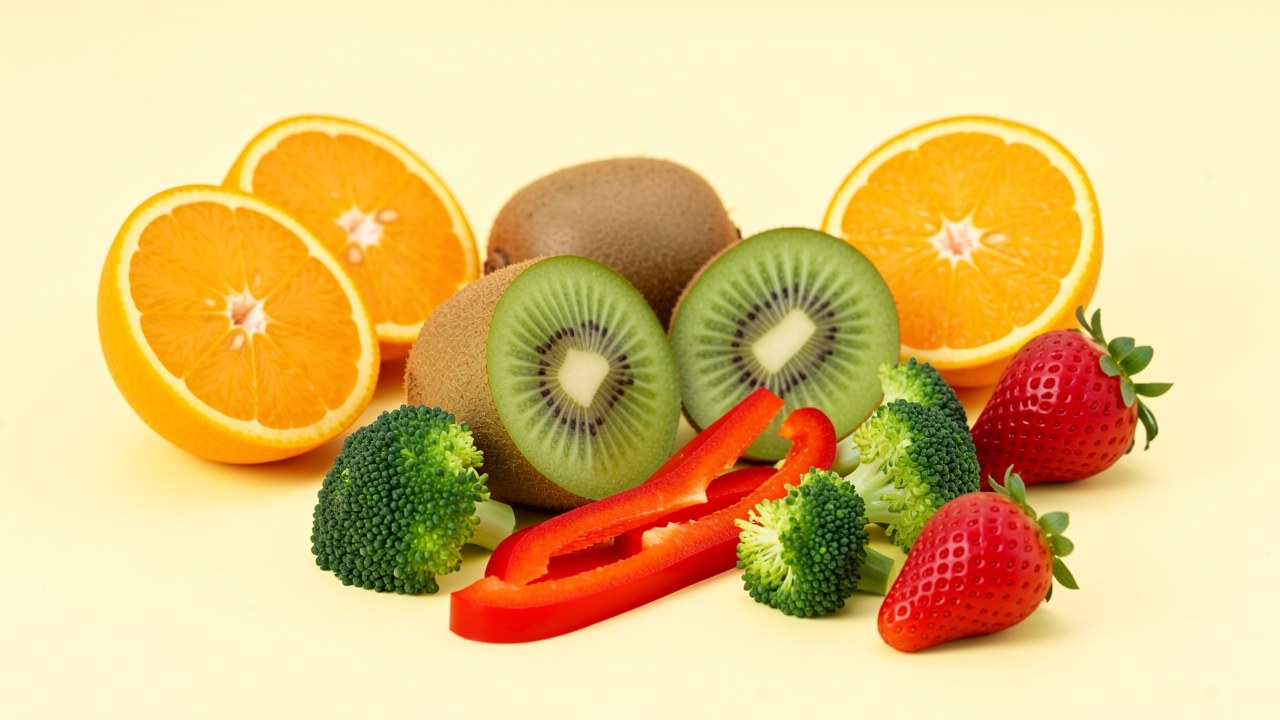
Many fruits and vegetables are excellent sources of vitamin C. Citrus fruits like oranges and grapefruit are well-known, but many other foods contain even higher amounts per serving. Bell peppers, strawberries, kiwi, and broccoli are among the richest sources.
To get the most vitamin C from your food, choose fresh or lightly cooked options. Vitamin C is sensitive to heat and light, so prolonged storage and cooking can reduce its content. Steaming or microwaving vegetables briefly can help retain more of the nutrient.
- Red and green bell peppers
- Citrus fruits such as oranges and grapefruit
- Kiwi
- Strawberries
- Broccoli
- Brussels sprouts
- Tomatoes
- Potatoes
Sources: Harvard T.H. Chan School of Public Health, National Library of Medicine, U.S. Department of Health and Human Services
Signs of Vitamin C Deficiency
Vitamin C deficiency is rare in the United States and Canada, but it can occur, especially if you have a very limited diet, smoke, or have certain medical conditions. Early signs may appear after several weeks of inadequate intake.
A severe deficiency leads to scurvy, a condition characterized by fatigue, gum inflammation, small red or purple spots on the skin, joint pain, poor wound healing, and corkscrew hairs. More general signs of deficiency include bleeding gums, easy bruising, and anemia.
- Fatigue and weakness
- Gum inflammation and bleeding
- Easy bruising and poor wound healing
- Small red or purple spots on the skin
- Joint pain
- Corkscrew hairs (a sign of scurvy)
Sources: Office of Dietary Supplements, National Institutes of Health, Harvard T.H. Chan School of Public Health, National Library of Medicine, U.S. Department of Health and Human Services
Who May Need a Supplement
Most adults can meet their vitamin C needs through a balanced diet rich in fruits and vegetables. However, certain individuals may consider a supplement to ensure adequate intake.
People who smoke, have limited dietary variety, or have conditions that increase oxidative stress may have higher requirements. Additionally, because vitamin C is water-soluble and not stored in the body, regular intake is necessary, and a supplement can help fill gaps when dietary sources are insufficient.
- People who smoke (need an extra 35 mg/day)
- Adults with a very limited intake of fruits and vegetables
- Individuals with certain malabsorption conditions
- People whose diets are low in non-heme iron and want to improve absorption
Sources: Office of Dietary Supplements, National Institutes of Health, Linus Pauling Institute, Oregon State University
Upper Intake Level
Vitamin C from food is safe because your body excretes what it does not need. However, very high doses from supplements can cause unwanted side effects. The Tolerable Upper Intake Level (UL) for adults is 2,000 mg per day, but even lower amounts may cause digestive issues in some people.
If you take more than 1,000 mg at a time, your body absorbs less of it, and the remainder can lead to diarrhea, nausea, and stomach cramps. Long-term high doses above the UL may increase the risk of kidney stones in susceptible individuals, especially if you have kidney disease or a history of stones.
People with hemochromatosis, a condition that causes excessive iron absorption, should avoid high-dose vitamin C supplements because they can worsen iron overload. If you have any of these conditions or are taking medications, check with your healthcare provider before starting a supplement.
Sources: Office of Dietary Supplements, National Institutes of Health, Harvard T.H. Chan School of Public Health
Frequently asked questions
Can vitamin C prevent or cure the common cold?
Vitamin C does not prevent the common cold for most people. However, taking vitamin C regularly as a supplement may modestly reduce how long a cold lasts and how severe it is. Taking vitamin C only after cold symptoms start does not appear to help.
Sources: Office of Dietary Supplements, National Institutes of Health, Harvard T.H. Chan School of Public HealthWhat is the best time of day to take vitamin C?
There is no strong scientific evidence pointing to a specific best time. Because vitamin C is water-soluble and not stored, a consistent daily intake is more important than the time of day. If you take a supplement, splitting it into smaller doses throughout the day may improve absorption. Avoid taking more than 1,000 mg at once to reduce the risk of digestive upset.
Sources: Office of Dietary Supplements, National Institutes of Health, Harvard T.H. Chan School of Public HealthIs it possible to get too much vitamin C from food?
It is extremely unlikely to get too much vitamin C from food alone. Your body tightly controls absorption and excretes excess amounts. The risk of side effects, such as diarrhea and stomach cramps, comes mainly from high-dose supplements of 2,000 mg or more per day.
Sources: Office of Dietary Supplements, National Institutes of Health, Harvard T.H. Chan School of Public HealthWhich foods have more vitamin C than oranges?
Many foods contain more vitamin C per serving than oranges. For example, red bell peppers, green bell peppers, kiwi, broccoli, and strawberries all provide higher amounts. A single medium orange offers about 70 mg, while a half-cup of red bell pepper provides about 95 mg.
Sources: Harvard T.H. Chan School of Public HealthSources
- Vitamin C - Health Professional Fact Sheet — Office of Dietary Supplements, National Institutes of Health
- Vitamin C - Consumer — Office of Dietary Supplements, National Institutes of Health
- Vitamin C | Linus Pauling Institute | Oregon State University — Linus Pauling Institute, Oregon State University
- Vitamin C • The Nutrition Source — Harvard T.H. Chan School of Public Health
- Vitamin C: MedlinePlus Medical Encyclopedia — National Library of Medicine, U.S. Department of Health and Human Services
- Vitamin C: A Comprehensive Review of Its Role in Health, Disease Prevention, and Therapeutic Potential — Molecules, NIH Open Access Publisher
- Dietary Supplements: What You Need to Know - Consumer — Office of Dietary Supplements, National Institutes of Health
- Dietary Supplements for Immune Function and Infectious Diseases — Office of Dietary Supplements, National Institutes of Health