Roles of Major Minerals and Trace Minerals
Your body relies on minerals for countless everyday tasks, from building strong bones to sending messages through your nerves. Unlike vitamins, which are organic compounds, minerals are inorganic elements that come from soil and water and find their way into the foods you eat. Your body requires them in different amounts, but each one plays a vital role in keeping you healthy.
Some minerals, such as calcium, magnesium, and potassium, are needed in larger amounts. These are often called major minerals. Others, like iron and zinc, are needed in smaller amounts but are equally essential. Your body cannot make minerals on its own, so you need to get them from your diet.
- Major minerals: calcium, magnesium, potassium, sodium
- Trace minerals: iron, zinc, iodine, fluoride
- Adult daily needs vary by age and life stage
Sources: National Institute on Aging (NIA), National Institutes of Health (NIH)
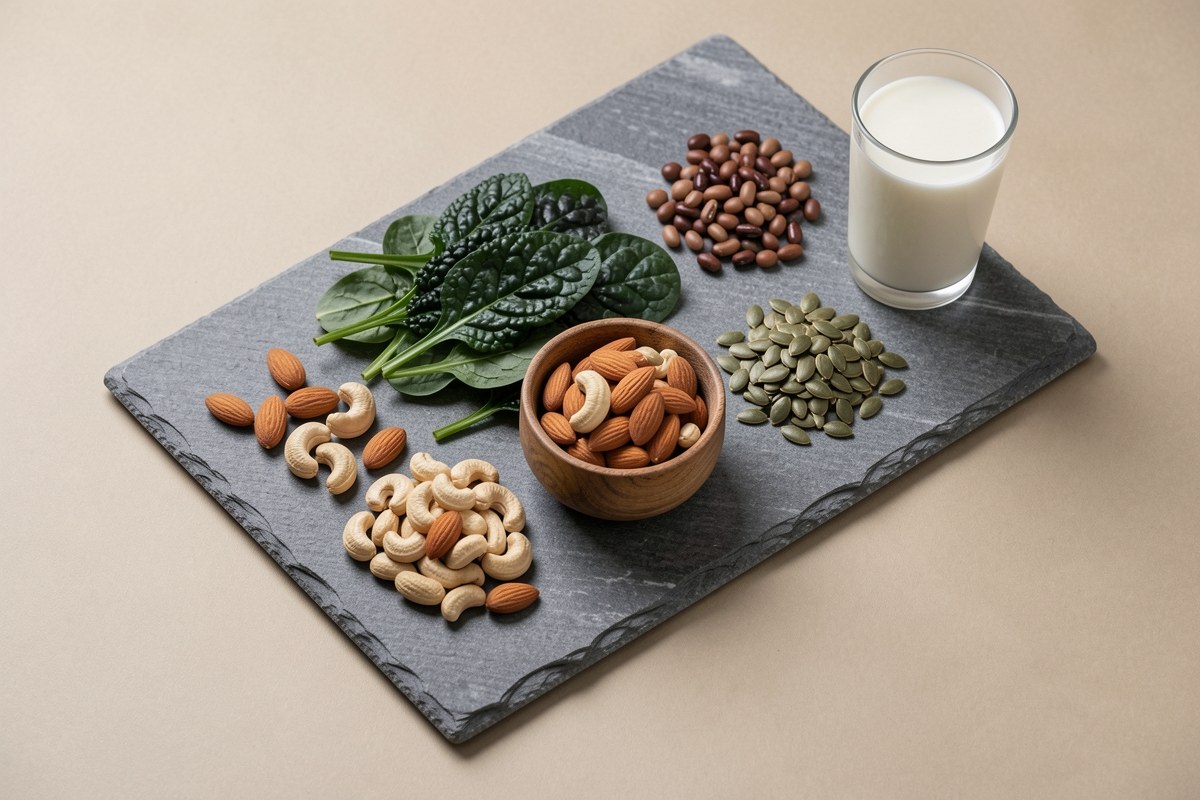
Calcium: bone health
Calcium is the most abundant mineral in your body, and it is essential for building and maintaining strong bones and teeth. It also plays a role in muscle movement, nerve transmission, and helping blood vessels move blood throughout the body.
Your body needs vitamin D to absorb calcium effectively. Without enough vitamin D, your body cannot absorb the calcium you consume, no matter how much you take in. Many people get calcium from dairy products and calcium-fortified foods.
As you age, your bones naturally lose calcium. After about age 30, bone loss slowly begins, which can eventually lead to weak, fragile bones and a higher risk of fractures.
- Helps build and maintain strong bones and teeth
- Supports muscle movement and nerve transmission
- Helps blood vessels move blood and releases hormones
- Most abundant mineral in the body
Sources: Office of Dietary Supplements (ODS), National Institutes of Health (NIH)
Your Daily Calcium Targets
The amount of calcium you need each day changes as you get older. The Recommended Dietary Allowance (RDA) is the average daily level of intake sufficient to meet the nutrient requirements of nearly all healthy people. The Tolerable Upper Intake Level (UL) is the highest daily intake unlikely to cause adverse health effects.
The table below summarizes the RDA and UL for calcium for adults.
Note that the UL includes calcium from both food and supplements. For adults 51 years and older, the UL is 2,000 mg per day, while for adults 19–50 years it is 2,500 mg per day.
| Age Group | RDA (mg/day) | UL (mg/day) |
|---|---|---|
| Adults 19–50 years | 1,000 | 2,500 |
| Women 51–70 years | 1,200 | 2,000 |
| Men 51–70 years | 1,000 | 2,000 |
| Adults 71 years and older | 1,200 | 2,000 |
Sources: Office of Dietary Supplements (ODS), National Institutes of Health (NIH)
Magnesium: enzymes and muscles
Magnesium is a cofactor in more than 300 enzyme systems that regulate diverse biochemical reactions, including protein synthesis, muscle and nerve function, blood glucose control, and blood pressure regulation.
Good dietary sources of magnesium include nuts (such as cashews), legumes, dark green vegetables, seafood, and whole grains. Incorporating these foods into your meals can help you meet your daily needs.
- Cofactor in over 300 enzyme systems
- Regulates protein synthesis, muscle and nerve function, blood glucose, and blood pressure
- Found in nuts, legumes, dark green vegetables, seafood, whole grains
Sources: Nutrients (MDPI) via PubMed Central, Better Health Channel, Victorian Government (Australia)
Iron: Oxygen Transport
Iron is a trace mineral that is essential for oxygen transport in the body. It is a key component of hemoglobin, the protein in red blood cells that carries oxygen from the lungs to tissues throughout the body.
Iron needs vary by age and sex. Adult women of childbearing age have higher needs due to menstrual blood loss, but after menopause, women's needs fall closer to men's.
Good dietary sources of iron include meat, poultry, fish, beans, and fortified cereals.
- Essential for oxygen transport in red blood cells
- Adult women of childbearing age have higher needs
- Found in meat, poultry, fish, beans, fortified cereals
Sources: National Institute on Aging (NIA), National Institutes of Health (NIH)
Zinc: Immune Function and Healing
Zinc is a trace mineral that supports the immune system and helps the body heal wounds. It is also essential for normal growth and development. In adults, zinc plays a role in neuronal formation and the formation of neuronal synapses.
Zinc is found in a variety of foods, including meat, shellfish, dairy, and legumes. Oysters are particularly rich in zinc, but even a daily serving of beans or nuts can contribute to your needs.
Zinc deficiency can impair immune function and slow wound healing. Excessive zinc intake can interfere with copper absorption, so it is important to aim for recommended amounts rather than megadoses.
- Supports immune function and wound healing
- Essential for neuronal formation and synaptic communication
- Found in meat, shellfish, dairy, legumes
- Excess zinc can interfere with copper absorption
Sources: Nutrients (MDPI) via PubMed Central
Potassium and Sodium: The Balance Keepers
Potassium and sodium are two electrolytes that work together to maintain fluid balance, nerve signaling, and muscle contractions. While sodium often gets attention for its connection to high blood pressure, potassium helps counteract sodium's effects and supports normal blood pressure.
Potassium is found in many fruits and vegetables, such as bananas, potatoes, spinach, and avocados. Despite its abundance in food, many adults do not consume enough. The Dietary Guidelines for Americans identify potassium as a nutrient of public health concern because low intakes are associated with risk for chronic disease.
Sodium, on the other hand, is often consumed in excess through processed foods. Balancing your sodium and potassium intake by eating more whole foods and fewer packaged snacks is a practical step for overall health. Signs of low potassium include weakness, fatigue, and muscle cramps.
- Electrolytes that regulate fluid balance and nerve function
- Potassium helps counteract sodium's effects on blood pressure
- Found in bananas, potatoes, spinach, avocados
- Low potassium may cause weakness, fatigue, muscle cramps
Sources: National Institute on Aging (NIA), National Institutes of Health (NIH), Nutrients (MDPI) via PubMed Central
Mineral-Rich Food Sources
Eating a variety of whole foods can help you meet your mineral needs. The table below summarizes common food sources for key minerals based on the evidence provided.
| Mineral | Food Sources |
|---|---|
| Calcium | Dairy products, calcium-fortified foods |
| Magnesium | Nuts (e.g., cashews), legumes, dark green vegetables, seafood, whole grains |
| Iron | Meat, poultry, fish, beans, fortified cereals |
| Zinc | Meat, shellfish, dairy, legumes |
| Potassium | Bananas, potatoes, spinach, avocados |
Sources: Office of Dietary Supplements (ODS), National Institutes of Health (NIH), Better Health Channel, Victorian Government (Australia)
Interactions and Safe Supplementation
Minerals can interact with each other and with medications. For example, high doses of one mineral can interfere with the absorption of another. Calcium supplements can interact with certain medicines.
Calcium supplements can cause side effects like gas, bloating, and constipation in some people. High calcium intakes might increase the risk of heart disease and prostate cancer, though the evidence is not conclusive.
Some studies find calcium supplements with or without vitamin D increase bone mineral density in older adults, but others do not. It is not clear whether calcium supplements help prevent fractures.
Before starting any mineral supplement, it is wise to consult a healthcare provider. They can help you determine whether you actually need a supplement, which form might be best, and how to avoid potential interactions with your health conditions and medications.
- High doses of one mineral can affect absorption of another
- Calcium supplements can interact with certain medications
- Calcium supplements may cause gas, bloating, constipation
- Discuss supplements with your healthcare provider first
Sources: Office of Dietary Supplements (ODS), National Institutes of Health (NIH)
Frequently asked questions
Should I take a calcium supplement?
Calcium supplements can help you meet your daily calcium needs, especially if you do not get enough from food. However, the evidence on whether they prevent fractures is mixed. Some studies show they can increase bone mineral density, but not all do, and it is unclear if they reduce fracture risk. Calcium supplements can also cause side effects like gas, bloating, and constipation, and they may interact with certain medicines. If you are considering a calcium supplement, discuss it with your healthcare provider to determine if it is right for you.
Sources: Office of Dietary Supplements (ODS), National Institutes of Health (NIH)Can minerals interfere with each other?
Yes, minerals can compete for absorption. For example, taking high doses of one mineral can interfere with the absorption of another. This is one reason why it is generally better to get minerals from food rather than taking large individual supplements. If you do take supplements, timing them apart may help minimize interference, but it is best to follow your healthcare provider's advice based on your specific needs.
Sources: Office of Dietary Supplements (ODS), National Institutes of Health (NIH)What is the best magnesium supplement form?
Different forms, such as magnesium citrate, magnesium oxide, or magnesium glycinate, have different absorption rates and may affect your digestive system differently. Your choice may depend on your individual needs and tolerance. It is always a good idea to talk to a healthcare provider before starting a magnesium supplement to find the most suitable option for you.
How much iron should an adult take?
Iron needs vary by age, sex, and life stage. Most adults can get enough iron from a varied diet. Supplementing with iron should be approached cautiously, as excess iron can be harmful. If you suspect an iron deficiency, your healthcare provider can test your levels and recommend an appropriate dose.
Sources: National Institute on Aging (NIA), National Institutes of Health (NIH)What are the symptoms of low potassium?
Low potassium, also known as hypokalemia, can cause weakness, fatigue, and muscle cramps. Severe deficiency may lead to more serious issues, but these symptoms can also be caused by other conditions. Because potassium is vital for nerve and muscle function, it is important to address low levels. If you experience these symptoms, especially if you have a medical condition or take diuretics, consult your healthcare provider for evaluation.
Sources: National Institute on Aging (NIA), National Institutes of Health (NIH)Sources
- Calcium - Consumer — Office of Dietary Supplements (ODS), National Institutes of Health (NIH)
- Vitamins and Minerals for Older Adults — National Institute on Aging (NIA), National Institutes of Health (NIH)
- Vitamins and minerals — Better Health Channel, Victorian Government (Australia)
- Contribution of Dietary Supplements to Nutritional Adequacy by Socioeconomic Subgroups in Adults of the United States — Nutrients (MDPI) via PubMed Central
- Vitamins and Minerals for Energy, Fatigue and Cognition: A Narrative Review of the Biochemical and Clinical Evidence — Nutrients (MDPI) via PubMed Central